
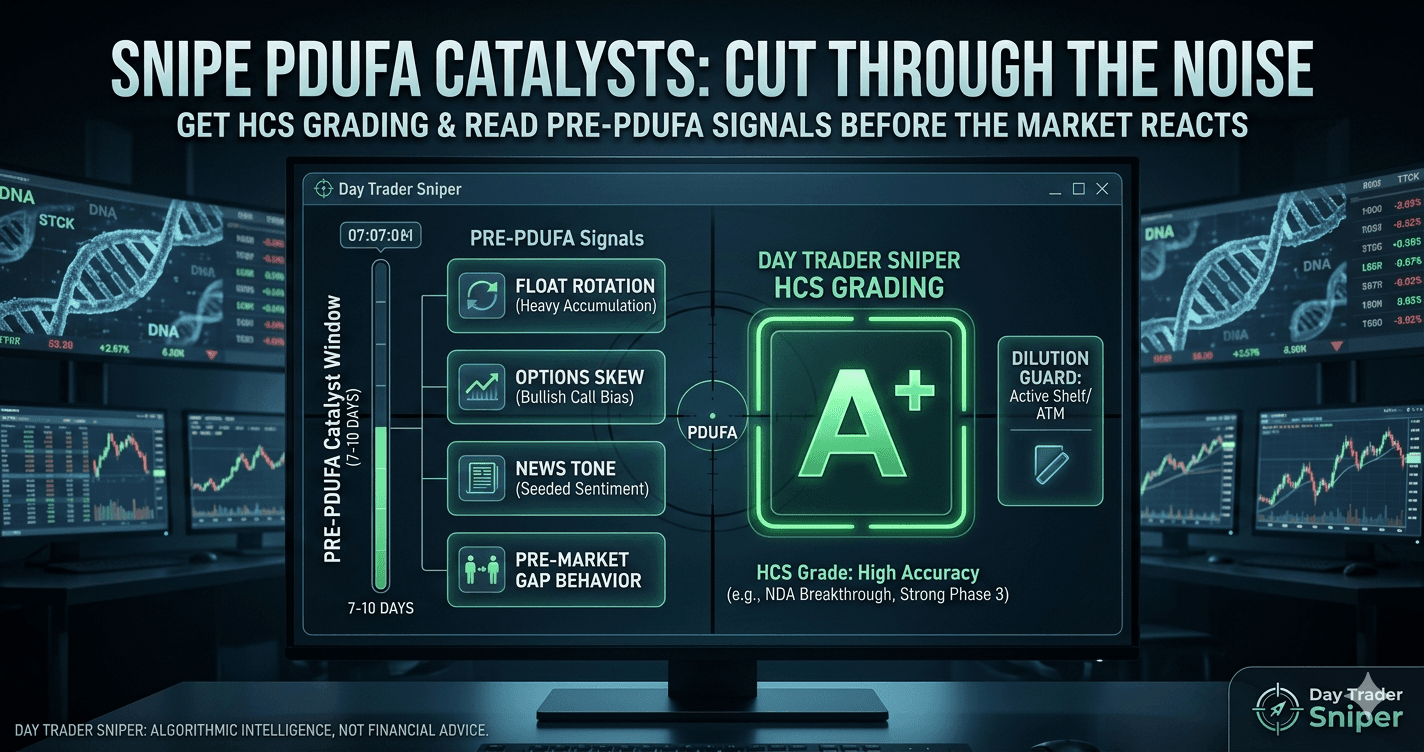
A PDUFA date is a deadline. The FDA has to respond to a drug approval application by that date - approve, reject, or request more data. For traders, it marks one of the most predictable volatility events in the small cap calendar.
Most traders play it wrong. They wait for the decision. The traders who pull from PDUFA plays have already acted by the time the headline hits.
Pre-PDUFA signals
The stock starts telling you something in the 5–10 trading days before the decision.
Float rotation. How many times has the float turned over in the past week? Heavy rotation in a low-float biotech before a PDUFA is smart money positioning - either accumulating or distributing.
Pre-market gap behavior. A stock that gaps up on low volume and fades into open is distributing under the strength. One that holds gap-ups through the first 30 minutes has real demand behind it.
News tone shift. Read press releases and analyst notes from the two weeks prior. When language moves from "pending" to "anticipated" without new data attached, someone is seeding sentiment.
Options skew. Heavy call buying with out-of-the-money puts is a different setup than the reverse. The implied volatility term structure going into the decision date shows where institutional hedges sit.
Three setups that work
The pre-announcement run: Buy the catalyst window, not the decision. 7–10 days before the PDUFA, light size, tight stop below the most recent base. If accumulation confirms, add. Exit before the decision unless your conviction is high.
The gap-and-go on approval: Approval hits. The stock gaps 30–100%+ premarket. Do not chase the open. Wait for the first 3-minute candle to close above the opening range. Your entry is the break, your stop is below the opening candle low. Approval gaps often run through the first session on retail FOMO.
The fade on rejection: A CRL or rejection drops a stock 40–80% in minutes. If the float is still elevated after the drop, it distributes for sessions. Short into strength, not weakness.
Where traders lose money: They treat the PDUFA as binary gambling. The trade is in reading what the market already knows before the announcement. The announcement accelerates a move that was already telegraphed.
Traders who lose on PDUFA plays size up the night before and make binary bets. Traders who build accounts on them read the setup for two weeks and enter early on small size.
Catalyst classification changes the math
Not every PDUFA carries the same risk. An NDA with breakthrough therapy designation and strong Phase 3 data is a different animal than a standard review on mixed trial results. Knowing the FDA's historical approval rate for that specific indication and submission type cuts through the noise before you size a position.
Day Trader Sniper's Catalyst Analysis flags real catalysts vs PR pumps, so you know before entry whether you're in a high-signal or high-noise environment. HCS - deeper headline-reliability grading - is in active beta. Most retail traders don't have that context.




©2026 Day Trader Sniper - all rights reserved