The Number Most Traders Ignore Until It's Too Late
Float rotation is the signal most day traders ignore - until they're holding a bag. Here's how catalysts work and what to check before you enter.

Most traders know what float is. Almost none use float rotation correctly before entering a trade.
That's the gap. And it shows up in blown accounts, chased entries, and bags held through halts.
Float is not a static number. It's a pressure gauge. Understanding how it moves during a catalyst tells you whether you're entering a real setup or walking into the last leg of someone else's exit.
What Float Actually Measures
Float is the number of shares available for public trading - total shares outstanding minus insider holdings, restricted shares, and institutional lockups. A low float stock has few shares in circulation. High demand against low supply creates volatile, fast-moving price action.
That's why low float stock catalysts attract momentum traders. The math is simple: fewer shares, bigger moves per dollar of buying pressure.
But the math works both ways. The same low float that creates a 40% move in 20 minutes can create a 60% reversal in 10. The velocity cuts in both directions. Float alone doesn't tell you which direction you're in at any given moment. Float rotation does.
What Float Rotation Actually Tells You
Float rotation measures how many times the entire float has traded during a session. A float rotation of 1x means every share in circulation changed hands once. A rotation of 5x means the entire float traded five times over.
High float rotation on a genuine hard catalyst is confirmation. Buyers are absorbing sell pressure repeatedly. Conviction is real. The move is sustainable.
High float rotation on a soft catalyst or a dilutive company is the warning sign. Shares are moving rapidly because sellers are actively distributing. Each rotation cycle is another wave of retail buyers absorbing insider or institutional exits. The stock looks active. It's being liquidated.
The number tells you the activity. The context tells you the direction of the money.
How to Read Float Rotation Before the Entry
Three data points, in this order:
1. What is the float?Under 5 million shares is extremely low float - moves fast, reversal risk is high. 5–20 million is low float - good momentum candidate. Over 50 million on a small-cap catalyst is often a trap. High float stocks don't squeeze.
2. What is relative volume doing?Relative volume compares today's volume to the average for the same time period. Relative volume of 5x or higher confirms that abnormal interest is driving the move - not normal trading noise. Below 3x on a catalyst is a warning that the move lacks conviction.
3. How many float rotations have already occurred?A stock on its first float rotation in the first 30 minutes of a catalyst is early in the move. A stock on its fifth float rotation by 10am has likely already distributed most of the smart money's position. You're looking at retail FOMO volume, not institutional confirmation.
Entering a low float stock catalyst on rotation 1 or 2 with high relative volume and a verified hard catalyst is a clean setup. Entering on rotation 4 or 5 without checking dilution is how traders become exit liquidity.
The Dilution Problem Float Rotation Can't Tell You Alone
Float rotation is volume-based data. It tells you how much trading is happening. It does not tell you who is selling.
A low float stock catalyst with 4x float rotation could mean retail buyers driving a genuine move. It could also mean a company with an active ATM facility selling shares into every tick of buying pressure, using the catalyst headline to maximize their exit price.
The dilution picture - cash runway, S-3 status, ATM activity - is the layer that float rotation can't show alone. A trader who reads float rotation without checking dilution status is working with half the information. The setup looks clean. The company is using it as a managed distribution event.
Both data points together - float rotation and dilution status - give you the complete picture before the entry.
Common Mistakes to Avoid
Entering a low float catalyst without checking rotation count. Late-stage entries on high-rotation stocks carry significantly more reversal risk. The float has already turned over multiple times. The early buyers are looking for exits.
Confusing high relative volume with high float rotation. They are related but not the same. Relative volume tells you today versus average. Float rotation tells you how many complete cycles of the float have traded. A large-float stock can have high relative volume with low float rotation. A low-float stock can have low relative volume but still be on its third rotation if the float is tiny.
Ignoring dilution when float and volume look clean. A pristine float rotation setup on a company with 30 days of cash runway and an active S-3 is a trap dressed as a setup.
FAQ
What is a good float size for a momentum catalyst?Under 20 million shares is the range most momentum day traders target. Under 5 million produces the most volatile moves but also the fastest reversals.
How many float rotations is too many before entry?There's no universal number, but entering after 3 or more rotations in the first hour of a catalyst significantly increases the probability of buying into distribution rather than momentum.
Where do I find float rotation data in real time?Most standard scanners don't surface real-time float rotation automatically. It requires a platform that calculates volume against float size and updates continuously during the session.
Float rotation is the signal hiding in plain sight. The traders who use it consistently enter earlier, exit cleaner, and avoid the late-stage distributions that blow up accounts.
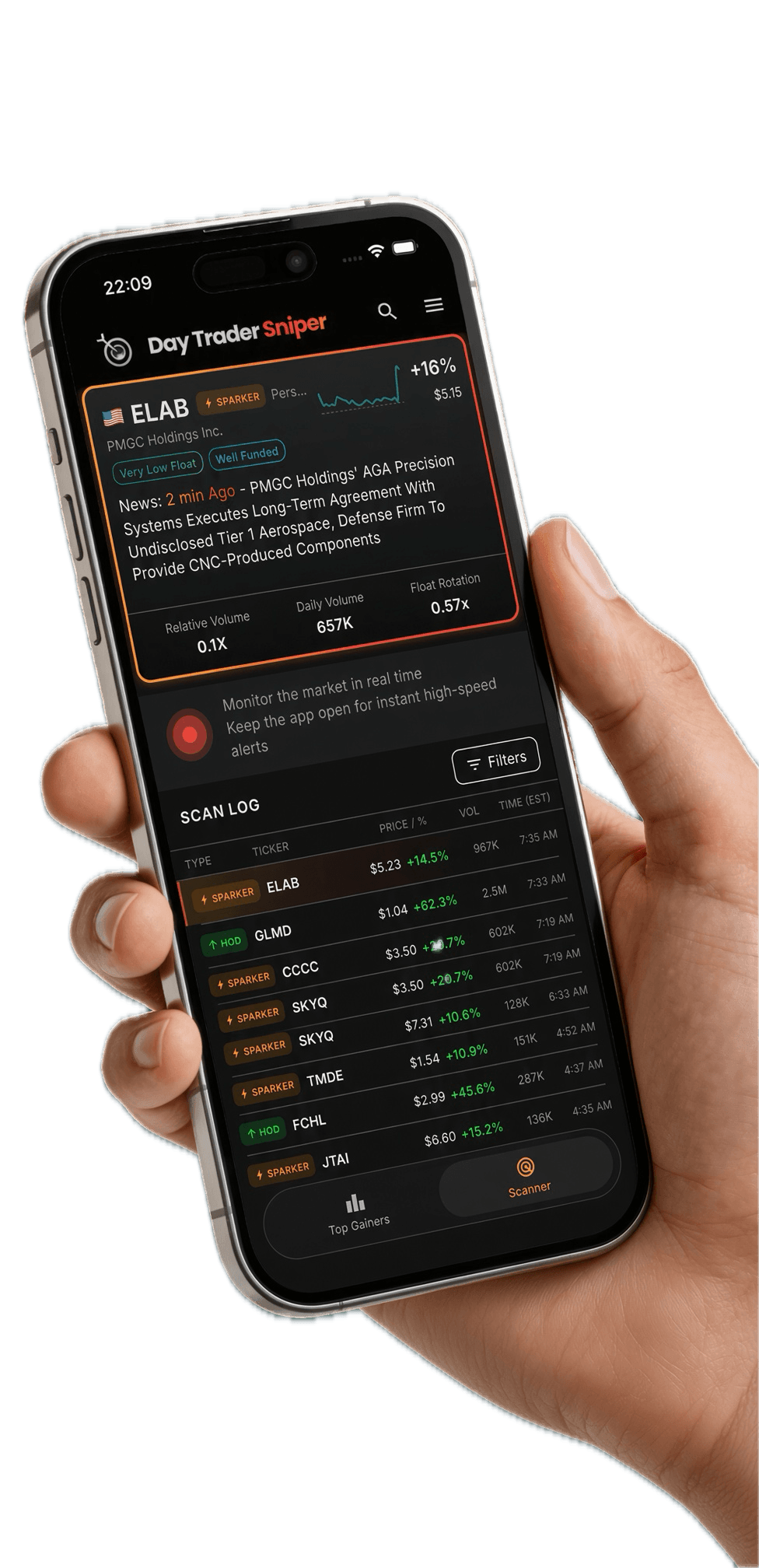
Day Trader Sniper surfaces float, relative volume, and dilution status at the moment of the alert - before the first candle prints. The rotation picture is already in front of you when the catalyst fires.
Ron Friedman
Written by