
Most low float stock catalyst moves fail for the same reason: traders think they are buying momentum, but they are really buying into fresh supply. GLTO was different. This was a rare case where the market got the new story first and the new supply later. That is why the move repriced so hard in premarket and why it became one of the cleanest small-cap momentum stocks of 2025.
Headline classification: complete acquisition
On November 10, 2025, Galecto, Inc. announced it had completed the acquisition of privately held Damora Therapeutics and paired it with an oversubscribed private financing of about $284.9 million. Read like a normal press release, it looked like simple M&A news. Read like a trader, it was much more than that. Galecto’s own proxy says the deal had been structured as a “simultaneous sign-and-close reverse merger” with a concurrent private placement, and the ownership math made the handoff obvious: legacy GLTO holders were cut to about 2.4% of the combined company, Damora holders got about 33.7%, and the financing investors got about 63.9%. That is not a routine tuck-in acquisition. That is a public wrapper being repurposed around a new company, a new pipeline, and a new cap table in one shot. For a day trader scanning pre-market gap stocks, that is the difference between soft headline noise and a real stock catalyst.
The shell swap in plain English
Old GLTO was already broken. In August 2023, Galecto said its Phase 2b GALACTIC-1 trial for GB0139 missed the primary endpoint and that it would discontinue the program. After that, the company moved into strategic alternatives mode and later executed a 1-for-25 reverse split to keep its Nasdaq listing in place. Damora was the opposite profile: private, fresh, and built around a mutCALR blood-cancer pipeline targeting myeloproliferative neoplasms such as essential thrombocythemia and myelofibrosis. So instead of waiting through the full IPO process, Damora effectively used GLTO’s public shell as a faster route to market. Galecto brought the listing. Damora brought the new story. The financing brought the fuel. The proxy put Galecto’s value at about $10.75 million including roughly $2.75 million of adjusted net cash, while Damora came in at $150 million. The stock market understood the handoff immediately. From a prior reference price of about $4.95, GLTO traded to $25.88 on November 10, a move of roughly 423%, while daily volume hit 43.784 million shares. Using the company’s investor presentation, the fully diluted as-converted share count was 61,998,882 shares, implying a market value of roughly $307 million at $4.95 and about $1.60 billion at the intraday high. That is why the move felt violent. The market was not slowly warming up to a biotech update. It was repricing a dead shell into a venture-backed oncology vehicle in real time.
Sniper’s take: why the tape was so clean
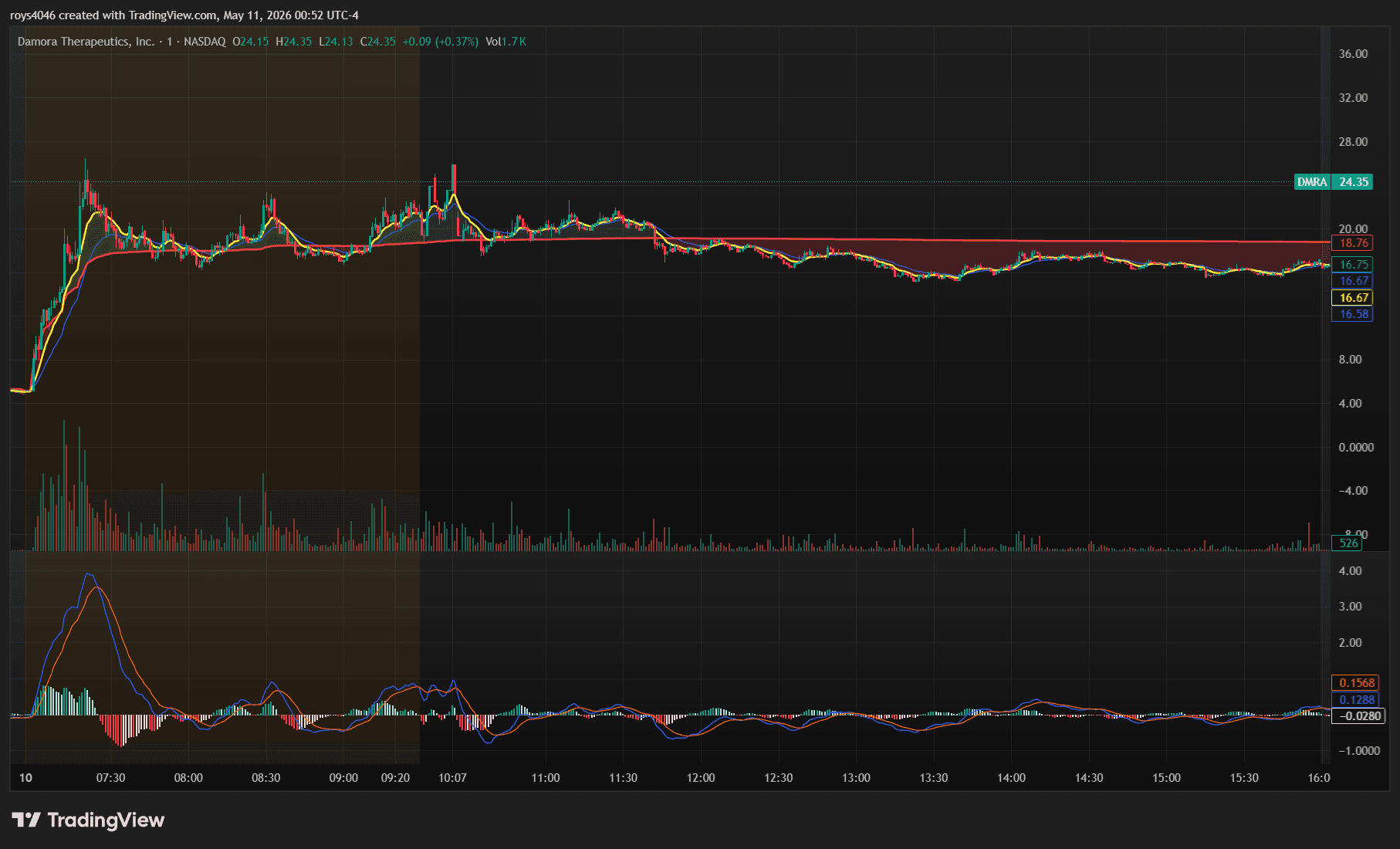
This is the part most traders miss. GLTO had the right story, but the real edge was the supply setup. Going into the event, the company had only about 1.324 million common shares outstanding. The merger absolutely created future dilution risk through the Series B and Series C preferred, but that supply was not live on November 10 because the preferred stock could not convert into common shares until stockholders approved the conversion proposal. That approval did not arrive until the February 9, 2026 special meeting. In other words: overhang, yes; live ammo, no. That is why the first leg ran clean. On the chart, the move plays like a side that scores early and never lets the stadium settle. The news hits at 7:00 a.m. Eastern. Price launches from the $5 area, cuts through the teens, and reaches the mid-$20s before the opening bell. MACD stays green through roughly the first 25 minutes of the run. Early pullbacks are shallow. VWAP acts like a control line, not a ceiling. By 11:47 a.m. Eastern, volume had already reached 23.26 million shares versus a 2.41 million-share average, and by the close the stock had traded 43.784 million shares - more than 33 times the pre-deal common share count. That is textbook low float stock catalyst behavior: tiny live supply, huge relative volume, and premarket price discovery doing most of the heavy lifting before late buyers even get to their screens. The reason GLTO failed to make a fresh high after the open is also the reason the setup was so good in the first place: most of the real repricing had already happened before 9:30, so regular hours became digestion, not discovery. Clean move early. Dangerous chase later.




©2026 Day Trader Sniper - all rights reserved